



Login to SuperPH: Smooth Access, Recovery and Account Safety
Login SuperPH gives you access to your account, so every detail on the sign-in screen has a purpose. Knowing when to enter your credentials, use Remember, recover a password, or stop and check a suspicious page makes access faster and helps prevent avoidable account problems.
SuperPH Login Screen and Account Controls
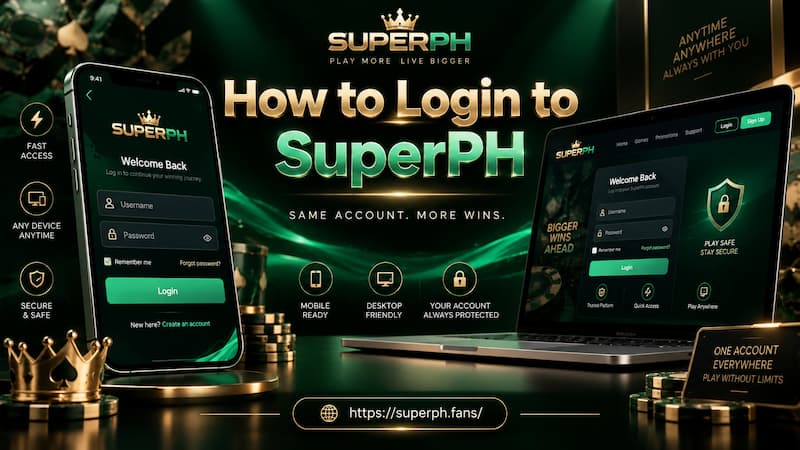
The Login screen is deliberately compact. Existing account holders only need two credentials: Username and Password. Alongside them are several controls that become useful in different situations rather than being buttons to click automatically.
At SuperPH, Login and Register have separate roles. Login is for returning users who already have account credentials, while Register is the route for someone who has not created an account yet. Mixing those two situations often leads to unnecessary password-reset attempts.
The main Login area contains:
- Username: The account name used when signing in.
- Password: The private credential connected to that account.
- Password visibility icon: Useful for checking a mistyped password before submitting it.
- Remember: Keeps the login session or account access more convenient on a familiar device.
- Forgot Password: The recovery route when the password can no longer be recalled reliably.
- Login button: Submits the entered credentials.
- Register now: Opens registration for users who do not yet have an account.
SuperPH screen also includes an 18+ confirmation and access to terms and conditions. These are worth reading as account access is tied to more than simply entering a username and opening the casino lobby.
How to Login to SuperPH
A normal Login should take only a short time. Most unnecessary problems come from rushing through one of the early steps, especially when saved credentials are involved.
How to Login to SuperPH
1. Open the correct SuperPH address
Start with the SuperPH address you normally use rather than following an unfamiliar Login link from a message, social post, pop-up, or forwarded conversation.
Before entering a password, take a second to check the address in the browser. A familiar logo or similar-looking Login design is not enough on its own. Credentials are far harder to protect after they have been entered on the wrong page.
2. Enter the Username
Type the Username connected with the account. If it has been saved in the browser, check that the correct account has been selected rather than assuming autofill chose the right one.
This becomes especially relevant on devices used for more than one account. A saved Username can look perfectly normal while belonging to a different login profile.
3. Enter the Password carefully
Passwords are less forgiving. One wrong character, an unexpected capital letter, or an old saved password can stop access immediately.
The visibility icon beside the Password field is useful here. Reveal the entry briefly and check it instead of repeatedly submitting the same uncertain password.
A practical pre-Login check takes only a few seconds:
- Caps Lock is not accidentally enabled.
- The correct keyboard language is active.
- The password manager has not inserted an old password.
- No extra spaces were copied with the credential.
- The Username and Password belong to the same account.
4. Choose whether to use Remember
The Remember option is a convenience control, not something that should always be selected.
On a personal phone or computer that nobody else uses, remembering access can remove some repetition from future Login sessions. On a borrowed laptop, shared desktop, internet café computer, or work device, leaving it unchecked is the better choice.
5. Press Login once
When the credentials are ready, press Login and allow the request to complete.
Repeatedly clicking the button does not fix incorrect credentials. If access fails, stop and identify the likely cause first. One careful correction is more useful than five identical attempts.
A failed Login does not automatically mean the account has a serious problem. A mistyped character, stale browser autofill, or incorrect Username can create exactly the same experience.
Remember Me and Shared Devices
The small Remember checkbox deserves more attention than it usually gets because the decision depends entirely on where Login is taking place.
Imagine two situations. On a personally owned iPhone protected by Face ID and used by one person, quicker repeat access may be convenient. On a desktop shared between several family members or colleagues, the same convenience can expose the account to someone who was never meant to open it.
Use Remember when
It can make sense when:
- The device belongs to you.
- Other people cannot freely unlock or use it.
- The browser profile is private.
- You expect to return to the account regularly.
Leave Remember unchecked when
Avoid it on:
- Shared household computers.
- Borrowed phones or tablets.
- Office or public computers.
- Devices without a reliable screen lock.
- Any browser profile used by several people.
For shared hardware, also decline browser prompts asking to save the password. Once the session is finished, log out rather than simply closing the visible tab.
The decision is simple: Login convenience is useful only when it does not give someone else the same convenience. If you normally sign in from a phone, SuperPH app can make repeat access more direct, but the same shared-device rules still apply.
Forgot Password and Account Recovery
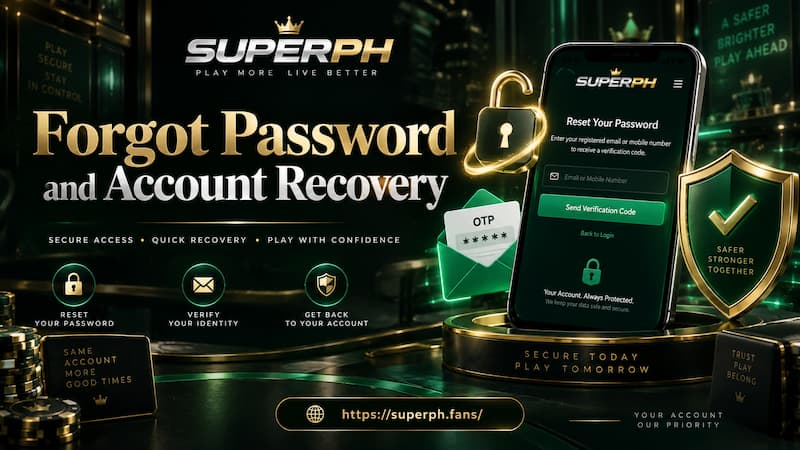
There comes a point where guessing stops being productive. If the password genuinely cannot be recalled, the Forgot Password option is there for that situation.
A common mistake is resetting a password too early. Suppose the password worked yesterday but today Chrome automatically inserts an older saved version. The account may be fine; the browser is simply supplying outdated information.
Forgot Password and Account Recovery
Before starting recovery:
- Confirm the Username.
- Remove any automatically filled password.
- Type the expected password manually.
- Use the visibility icon to inspect it.
- If it is still uncertain, select Forgot Password.
Follow the recovery instructions shown during the process and provide only the information requested there. Avoid assuming that a particular email, SMS, OTP, or verification route will always be used; recovery procedures can depend on the account setup and the flow presented at that moment.
Once a password has been successfully changed, update any password manager that still contains the old one. Otherwise the next Login can immediately recreate the same confusion.
Common Login Problems and Practical Checks
Login troubleshooting works better when the possibilities are narrowed down in order. Resetting everything at once can create a second problem without solving the first. For account questions outside these common cases, FAQs can provide another quick reference before changing account settings.
Correct-looking credentials are rejected
Start with the simplest causes. Reveal the Password, confirm the Username, check Caps Lock, and type the credentials manually.
For example, a password such as ManilaSpin28! is different from manilaspin28!. One capital letter is enough to make the Login fail even though the two entries look almost identical at a glance.
Autofill keeps inserting the wrong password
Browsers remember old information surprisingly well. This often happens after a password change.
Delete the filled entry from the Password box and type the current password manually. If that works, update the saved credential afterward rather than resetting the account again.
The Login page is not responding normally
When buttons fail to react or the page appears incomplete, treat it as a browser or connection issue before assuming the credentials are wrong. If the problem continues after the basic browser checks, contact support with the error details rather than repeatedly changing your credentials.
Try these steps in order:
- Refresh the page once.
- Check whether the internet connection is stable.
- Close the tab and reopen SuperPH.
- Try a normal browser window if the current session is behaving strangely.
- Clear relevant browser data only if simpler fixes fail.
Changing a password while the actual problem is an unstable connection adds work without fixing the original cause.
You never created an account
Password recovery cannot recover an account that does not exist. If there is no existing Username and Password, use Register now instead.
That distinction sounds obvious, yet it matters when somebody returns after a long gap and is unsure whether registration was ever completed.
Safer SuperPH Login Habits
An account can hold personal information and a Peso balance, so the Login deserves the same care as any other access point involving money.
A strong routine does not have to be complicated.
Keep the password unique
Avoid recycling a password already used for email, social media, shopping accounts, or unrelated casino accounts. Reuse creates a chain reaction: Exposure somewhere else can turn into unauthorized Login attempts here.
A password manager can help keep different credentials without relying on memory alone.
Check the address before entering credentials
Phishing works because fake pages are designed to feel familiar. Similar colours, logos, and button placement can be copied.
Checking the browser address before entering the Username and Password takes less time than dealing with compromised credentials later.
Keep credentials private
A genuine Login never becomes safer because another person knows the password. Do not send account credentials through Messenger, Telegram, WhatsApp, email, or screenshots.
If someone is helping troubleshoot a Login problem, describe the error instead. The actual password should stay private.
Treat public devices as temporary access
When using a device that is not personally controlled:
- Keep Remember unchecked.
- Do not save the password in the browser.
- Log out after finishing.
- Close the browser session.
- Avoid leaving screenshots containing account details behind.
Those small habits reduce the chance that a five-minute Login leaves access available much longer than intended.
Login Checklist Before Entering the Account
A good Login routine becomes almost automatic after a while. Before pressing the button, run through a short mental check:
- The SuperPH address is correct.
- The Username belongs to the intended account.
- The Password has no obvious typing error.
- Saved credentials are current.
- Remember is selected only on a trusted personal device.
- Forgot Password is used when the credential is genuinely lost.
- Register is used instead when no account exists.
- Login details have not been shared with another person.
There is no benefit in making account access complicated. The goal is a clean Login when credentials are correct and a sensible next move when they are not. Knowing the difference between a typo, an old saved password, a recovery situation, and a browser problem keeps access straightforward without turning every failed attempt into an account emergency.